Like many editors, I dabble in my own creative writing. While I’m a plotter at heart, I work with plenty of pantsers, and I’ve noticed that no matter the approach, most stories begin the same way: as fragments.
A character. A situation. A what-if. A scene that refuses to leave you alone.
Over the years, I’ve edited enough manuscripts to know this: a compelling premise isn’t the same thing as a story that can carry 80,000 words.
I’ve seen beautifully written drafts stall at 40,000 words because the protagonist didn’t actually want anything. I’ve seen clever concepts collapse under revision because nothing escalated. The idea was strong but the structure wasn’t.
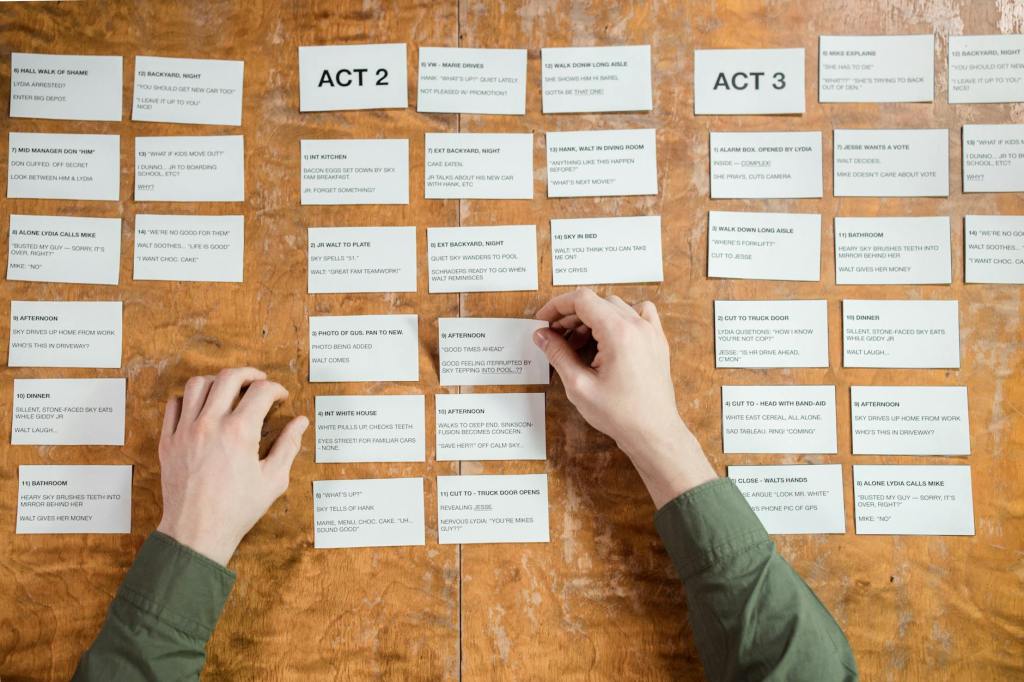
That’s why I developed a story map.
Originally, it was just for me – a way to get ideas out of my head and onto the page before I began drafting. Now I share it with clients when a manuscript feels wobbly, or when a writer wants to know whether they’re holding a novel or just an interesting situation.
So, what is a story map?
A story map is a single page where you capture the essentials:
- who your protagonist is
- what they want
- what’s standing in their way
- what changes by the end of the story.
When you put those elements side by side, patterns emerge. Gaps become obvious. Weak motivations glare back at you. And sometimes – and this is the good part – everything clicks and you notice connections you hadn’t seen. You feel that small surge of recognition: Oh. That’s the story.
How to use it
Writers tend to use the story map at 3 different moments.
Some use it before drafting. Others turn to it midway through when a story starts to sag. Others still use it before revision, helping them refocus on the emotional and structural spine of the manuscript.
If you prefer to discover your story as you draft, this isn’t about locking you into an outline. It’s simply a way to examine the story’s foundation, whether that’s before you begin or after you’ve started drafting.
Remember: Creating is messy work, so scribbles and half‑formed thoughts are welcome and can still give you a clearer sense of shape, direction and possibility.
The value isn’t in getting it perfect. The value is discovering whether your idea can sustain 80,000 words or whether it’s better suited to a short story.
If you’d like to try this for your own work, download the story map below.

 nehsana